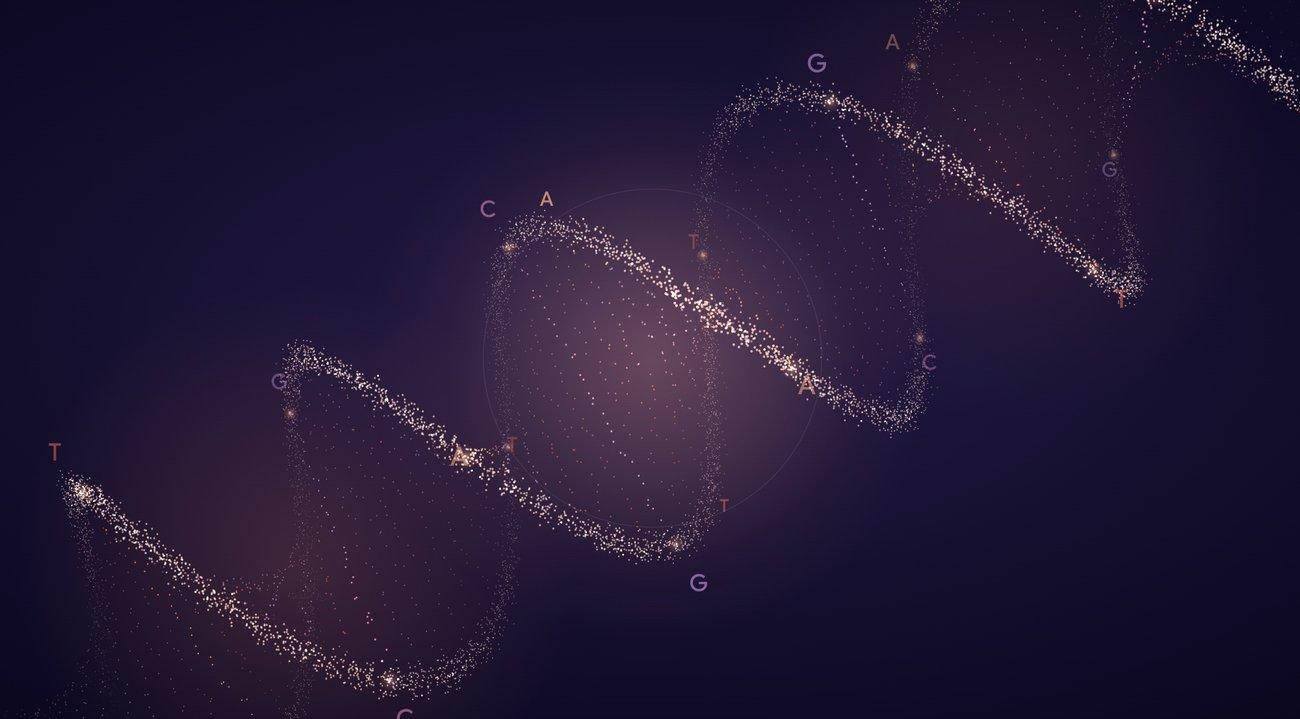
AI for Saving Giant Kelp Forests: How Google and CSIRO Use DeepVariant to Rebuild the Ocean's Future
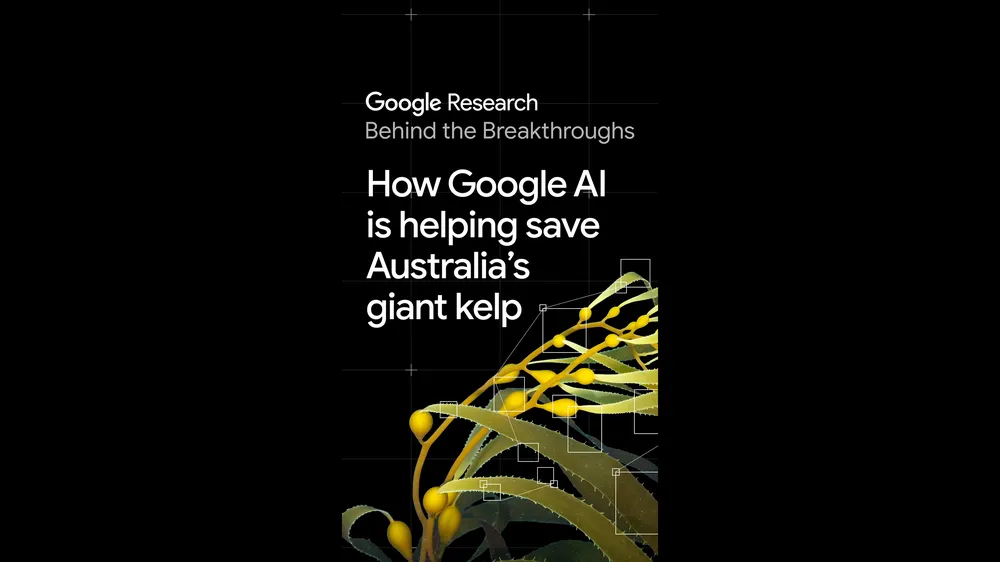
Executive Summary & Quick Answer:
AI isn't just chatbots — it is now helping save the ocean. Per Google's official announcement (November 12, 2026, timed with the start of COP31), Google partnered with Australia's national science agency (CSIRO) to publish two high-quality reference genomes for Australian giant kelp and to train a version of its open-source DeepVariant tool on kelp DNA; 600 wild specimens from 40 sites along Tasmania's coast — where kelp has fallen to just 5% of historic levels — were sequenced and analyzed.
Is the real value of AI in your organization defined beyond chatbots?
Get a DigiNoron enterprise AI transformation consultationWhat Are Giant Kelp Forests — and Why Are They Disappearing?
Giant kelp forests are underwater forests that protect coastlines, provide habitat for thousands of marine species, and anchor coastal ecosystems; but ocean warming is wiping them out worldwide, and along Tasmania's coast only about 5% of the historic extent remains.
Google timed the announcement with the opening of COP31, the UN climate conference, and framed it as the result of a research partnership with CSIRO, Australia's national science agency. The project combines two fields that are usually seen separately: genomics (mapping a species' complete DNA) and artificial intelligence (fast, scalable analysis of massive genetic datasets).
What makes the story matter is that "AI for ecological restoration" is no longer a slogan — real, verifiable data has been published: two official reference genomes, 600 sequenced specimens, and a map of Tasmania's kelp genetic diversity. This is the same data-driven language behind serious AI projects, from decoding the human genome with AlphaGenome to analyzing marine ecosystems.
What Exactly Did the Google–CSIRO Partnership Deliver?
The Google and CSIRO team published two high-quality reference genomes for Australian giant kelp and trained a version of Google's open-source DeepVariant tool on kelp DNA; 600 wild specimens collected from 40 sites along the Tasmanian coast were sequenced and analyzed.
Two separate achievements hide in this announcement: first, the publication of two reference genomes — the scientific foundation for future conservation-genetics work; and second, applying DeepVariant to extract genetic variation from 600 specimens — the dataset that reveals which kelp populations carry the tools to survive warmer water.
The effort is part of Google Australia's Digital Futures Initiative, a program that connects technology projects to Australia's real challenges. You can read the full details in Google's official blog announcement.
What Is DeepVariant — and Why Is It the Key Player Here?
DeepVariant is Google's open-source tool for identifying genetic variants (variant calling) from raw sequencing data; in the kelp project, a version of it was trained on giant kelp DNA so the genetic diversity of 600 specimens could be extracted with scalable speed and accuracy.
The remarkable part: DeepVariant was originally built for humans. It is a genomics tool that earned its scientific credibility in human genetics, and its code is openly available in Google's official GitHub repository. Reusing it on a marine species shows that good AI tools don't respect "domain boundaries" — the same analysis engine reads both a human genome and the genome of a giant seaweed.
For organizations, this pattern is familiar: the value of an AI tool multiplies when you start from proven, reusable technology instead of a bespoke one-off solution — the same logic pursued in professional AI use beyond content creation.
What Is a Reference Genome — and Why Can't Forest Restoration Work Without One?
A reference genome is the complete, high-quality DNA map of a species — the baseline every later analysis refers back to. The two published reference genomes for Australian kelp became the foundation of the project's conservation genetics, revealing which specimens carry heat-tolerance genes.
Without a reference, the data from 600 specimens is just a heap of raw sequence; with one, every specimen becomes comparable, classifiable, and mappable. It is the same pattern human genomics built through global reference projects — now applied at this quality to restoring a marine ecosystem for the first time.
Comparison: Traditional Reforestation vs AI- and Genomics-Driven Restoration
The traditional method plants whatever seedlings or spores are available and hopes for the best; the data-driven method first understands the genetics of the populations, then selects the most diverse, heat-tolerant specimens for cross-breeding and planting. It is the difference between gambling and engineering.
| Criterion | Traditional restoration | AI + genomics restoration (Google–CSIRO approach) |
|---|---|---|
| Basis for selecting specimens | Availability and apparent health | Genetic data: diversity and heat-tolerance genes |
| Analysis speed | Years of field observation and trial-and-error | 600 specimens from 40 sites analyzed with DeepVariant on a short timescale |
| Genetic diversity | Effectively unknown, left to chance | Measured and documented against a reference genome |
| Replanting failure risk | High; the next marine heatwave can wipe out the whole planting | Reduced by selecting heat-tolerant specimens |
| Repeatability for other species | Project-bound and dependent on local experience | A repeatable pattern: open-source tool + reference genome + field data |
Want your team to experience data-driven thinking at the level of tools and processes — not slogans?
Talk to DigiNoron's consultantsFrom DNA Analysis to Planting Forests: What Is the Practical Outcome?
The final output of the genetic analysis and lab-based cross-breeding studies is replanted kelp forests built from diverse, heat-tolerant specimens; not just planting again, but planting a version that has a real chance of surviving in a warming ocean.
Google explicitly states that the genetic analysis and the partners' lab-based cross-breeding studies are laying the groundwork for a real-world outcome: giant kelp forests replanted with diverse, heat-tolerant specimens. The approach moves problem-solving from "describing the crisis" to "engineering the solution."
Five Common Misconceptions About AI and Ecological Restoration
Before you draw the wrong conclusions from this story, correct these five widespread misconceptions; each one recurs in boardroom discussions and public debate and blocks a realistic understanding of AI's value.
1. "AI means chatbots and text generation"
DeepVariant has nothing to do with language models; it is a specialized genetic-data analysis tool. AI's biggest value is being built in specialized domains — genomics, energy, industry — not only in generic content generation.
2. "Robots are about to replace divers and researchers"
The opposite: field sampling across 40 Tasmanian sites was human work, and AI amplified the analysis layer. The durable pattern is "human + AI," not replacement.
3. "Just plant it again — why all these tools?"
Because planting without genetic diversity and heat tolerance dies with the next heatwave. That is exactly how Tasmania's kelp fell to 5%; restoration must be done with data, not hope.
4. "It's just a PR project timed with COP31"
The project's product is verifiable data: two published reference genomes and the analysis of 600 real specimens — assets independent researchers can use too. The publicity is the margin, not the substance.
5. "This technology is only for big tech"
The heart of the project — DeepVariant — is open-source and free. The real barrier is not tool access; it is data-driven thinking and the skill to use the tools — and that is exactly what education builds.
What Does This Story Teach Organizations and Learners?
The practical lesson is simple: AI's real value appears when a proven specialized tool is run on a large, data-rich problem; the same logic applies to your business — from customer data analysis to optimizing industrial processes.
For managers, the project offers a complete playbook: proven tool (DeepVariant) + quality field data (600 specimens) + specialist partnership (CSIRO) = a measurable outcome. None of the three ingredients was sufficient alone. For learners and students the message is just as clear: the future belongs to people who speak both the language of the problem and the language of AI tools — from genome analysis to natural intelligence in nature.
If you want to see how AI is being redefined at larger scales — from the human genome to orbital infrastructure — don't miss our deep-dives on AlphaGenome and decoding the human genome and Project Suncatcher's data centers in space.
Voice-Search Questions About This Project
How does AI help save giant kelp forests?
By rapidly and accurately analyzing the DNA of 600 Tasmanian kelp specimens with a version of Google's DeepVariant tool; the result identifies diverse, heat-tolerant specimens used for cross-breeding and replanting sustainable forests.
What is Google's DeepVariant?
An open-source Google tool for identifying genetic variants from sequencing data; it was originally built for the human genome and is now applied in the kelp project to analyze the DNA of a marine species.
Is your organization's AI roadmap — beyond chatbots — ready?
Start an AI transformation consultation with DigiNoronFrequently Asked Questions About AI and Kelp Forest Restoration
1. What did Google and CSIRO do in the kelp forest project?
They published two high-quality reference genomes for Australian giant kelp and trained a version of Google's open-source DeepVariant tool on kelp DNA; 600 wild specimens from 40 sites along Tasmania's coast were sequenced and analyzed.
2. What is DeepVariant and what is it used for?
Google's open-source tool for identifying genetic variants from raw sequencing data; originally developed for the human genome and, in the kelp project, applied at this scale to a marine species for the first time.
3. Why is Tasmanian giant kelp endangered?
Ocean warming has cut Tasmania's giant kelp population to about 5% of its historic extent; kelp forests play a vital role in protecting coastlines, providing habitat, and sustaining marine ecosystems.
4. What is a reference genome and why is it useful?
The complete, high-quality DNA map of a species that all later genetic analyses refer back to; with two kelp reference genomes, researchers can precisely map diversity and heat-tolerance genes across the 600 specimens.
5. What is the project's final outcome?
Replanting kelp forests with diverse, heat-tolerant specimens; the genetic analysis and lab-based cross-breeding studies pave the way for forests that have a real chance of surviving in a warming ocean.
About the Author & Content Authority:
DigiNoron Specialist Team — 5+ years of AI project experience
The DigiNoron Specialist Team — university faculty members and industry data engineers with 5+ years of AI project delivery in petrochemical, water-utility and urban-management sectors — compiled this analysis from Google's official blog announcement of the CSIRO giant kelp partnership (November 12, 2026) and public documentation of the open-source DeepVariant tool.
Cover image: official article image from Google's blog; news source: the official Google blog (blog.google).
DigiNoron Specialist Team
5+ Years of AI Project Experience
Related Articles & Analyses

Google's Project Suncatcher and the Blue Origin Partnership: How AI Data Centers Are Heading Into Earth Orbit