Why Iran Will Hold a Major Place in the Future of Artificial Intelligence
Executive Summary & Quick Answer:
Iran holds two assets simultaneously that none of today's AI superpowers possesses in full: the mineral foundation of technology (copper and silicon for chips, data centers and power infrastructure) and an educated workforce with deep historical scientific roots and a multi-million-strong diaspora inside Western tech companies. The combination starts paying off around 2030 and, within a decade, will consolidate Iran's place on the world AI map.
Iran's AI future will ultimately be built by Iran's own intelligent organizations. DigiNoron — with 5+ years of industrial and enterprise AI projects — is your partner on this journey.
Book an Enterprise AI Transformation Consultation with DigiNoronAI Is Not Just Software — It Is the Crown of a Massive Hardware Supply Chain
Every AI model runs on hardware built from silicon chips, copper cabling, network gear and energy-hungry data centers. The AI race therefore ultimately collapses into a race for silicon, copper, electricity and skilled humans — four commodities all becoming strategic assets of the coming decade.
Generative AI demands thousands of GPUs, and every intelligent agent needs power, grids and data centers. Chips are fabricated from silicon wafers, data centers are wired and cooled with copper, and the electrification megatrends of the coming century — from EVs to smart grids — all push copper demand upward. That is why the International Energy Agency (IEA) treats copper and other critical minerals as the heart of the next decade's technological transition, and why a global scramble around mineral supply chains intensifies by the day.
On this world map, countries usually sit at one end of the chain: either they have mines, or they have knowledge. Very few have ever offered both at scale at the same time. That is exactly where Iran's file opens differently.
Copper and Silicon: The Two Elements That Connect Iran's Mines to the World's Server Racks
In his influential analysis, Pouria Bavafa argues that the AI revolution should be read not merely as a software story, but as the culminating point of a long physical chain: the copper wiring inside data centers, the electricity they consume, the silicon wafers at the heart of every chip, and finally the algorithms that sit at the crown of the pyramid. His thesis is simple yet profound: whoever sits on the upstream links of this chain owns a lever on the future of AI itself.
This is not a marginal view. The USGS Mineral Commodity Summaries consistently ranks copper among the most strategically sensitive commodities of the coming decades. Data-center buildouts, grid upgrades and the electrification of transport together push copper demand upward at a pace mining supply struggles to match. Copper is also — quite literally — the metal of electrification: generators, transformers, motors and transmission lines are all copper-based.
| Chain Link | Raw Material | Why It Is Strategic |
|---|---|---|
| Power Grid & Data Centers | Copper | Copper is the backbone of every transmission line, transformer and cooling system; AI's power appetite is directly a copper story. |
| Chip Manufacturing | Silicon | Every processor and memory chip is built on silicon wafers; without silica, there is no hardware industry. |
| Electronics Assembly | Copper & Silicon | Boards, connectors and interconnects rely on both metals; the electronics supply chain begins in the mine. |
| Energy for AI | Electricity | AI models need cheap, reliable power; energy-rich countries hold a structural cost advantage in hosting data centers. |
| Software & Models | Human Capital | The crown of the chain: educated minds that turn silicon into intelligence — and Iran's deepest historical asset. |
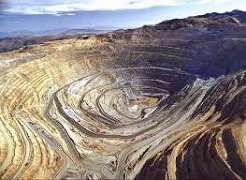
Now place Iran on this map: Sarcheshmeh in Kerman province is one of the world's largest copper complexes, and the Sungun copper deposit in East Azerbaijan — pictured in this article's cover — anchors a new national copper province. On the silica side, Iran holds extensive high-purity silica reserves alongside mature glass and ceramics industries. In other words, Iran is not a bystander in the raw-material story of AI; it owns equity in the very foundations.
Human Capital: From Al-Khwarizmi to the Iranian Diaspora Inside Western Tech
Minerals alone do not build intelligence — people do. The word algorithm itself is derived from the name of the ninth-century Persian mathematician al-Khwarizmi, and algebra bears the fingerprint of Iranian scholars such as Khayyam. That lineage matters less for nostalgia than for a hard fact: it signals a deep cultural infrastructure for mathematics and science that has survived for centuries.
Today, that tradition is measurable in numbers. Iranian universities — Sharif University of Technology in particular — are internationally recognized talent pipelines, and millions of Iranians live and work in North America and Europe, many inside the world's leading technology companies. This diaspora represents something no natural resource can buy: up-to-date knowledge, global professional networks and the working culture of advanced tech ecosystems. Every wave of return — even remote collaboration — functions as a compressed transfer of an entire university into the domestic economy. It is precisely the pattern that powered the technological leaps of China, India and South Korea.
The reverse flow matters just as much. International Olympiad medals in mathematics and physics, consistent representation in competitive programming, and thousands of Iranian researchers in AI labs worldwide all confirm one conclusion: Iran's intellectual capital is already competitive at a global level — what remains is to convert it into domestic value.
The 2030–2036 Roadmap: How the Pieces Fall Into Place
No credible public forecast assigns Iran a guaranteed seat at the AI high table. But the combination of mineral scarcity, infrastructure demand, global talent pressure and digital geopolitical realignment makes the 2030 horizon plausible — and 2036 the decade of consolidation.
- 2026–2028 — Foundation: global critical-mineral demand surges; Iranian copper gains new economic and geopolitical weight; national data-center and fiber programs accelerate.
- 2029–2030 — Turning Point: energy-intensive AI infrastructure migrates toward low-cost electricity geographies; Iran's energy and mineral endowments become a genuine negotiating asset with global AI players.
- 2031–2033 — Value Capture: the choice between exporting raw ore versus exporting processed materials determines Iran's real share of the AI value chain; domestic AI training programs and mid-tier processing capacity decide the outcome.
- 2034–2036 — Consolidation: a growing pipeline of returning and domestic specialists builds regional-scale AI products and services; the AI economy becomes a measurable share of GDP.
The essential point: 2030 is not a prediction — it is a window. Windows reward those who prepared before they opened.
You don't want your organization to miss the next AI wave. DigiNoron's consulting team is with you from idea to deployment.
Contact DigiNoron's AI EngineersCommon Mistakes About Iran's AI Future — and How to Avoid Them
The greatest risk is neither optimism nor pessimism; it is oversimplification. Each of the five common mistakes below can delay this historic opportunity — and each has a concrete remedy.
- Continued raw-material exports instead of value addition: if copper and silicon leave the country unprocessed, Iran's share of the chip chain stays marginal. Remedy: targeted investment in mid-tier processing and connecting mining industries to electronics and data-center sectors.
- Expecting overnight results: China's and Korea's leaps took two decades of planning, not a short project. Remedy: a ten-year roadmap with staged milestones from 2030 to 2036 and beyond.
- Neglecting the diaspora-return loop: without an economic base, competitive compensation and professional freedom, the diaspora cannot become a bridge. Remedy: design gradual return pathways — from remote work and joint projects to full relocation.
- Misalignment between education and industry: a graduate without applied AI skills is unconverted capital. Remedy: project-based AI education from childhood to the enterprise level — exactly what DigiNoron's specialized AI training delivers at both levels.
- Ignoring energy and data infrastructure: AI without reliable power and data infrastructure stays on paper. Remedy: tightly coupling data-center and renewable-energy programs with the country's copper and silica industries.
Frequently Asked Questions About the Future of AI and Iran
Does Iran have a real role to play in the future of AI?
Yes — and the claim is not merely rhetorical. Iran holds real assets on both the hardware side (copper and silicon reserves, cheap energy) and the software side (an educated workforce and a skilled diaspora). If these two forms of capital are connected, Iran can play a role in the AI value chain far beyond that of a simple consumer.
Why is copper suddenly so important for AI?
Because data centers, power grids and all electronic equipment depend on copper, and AI growth has sharply increased electricity and equipment consumption. Every intelligent agent and every large model creates new copper demand — while supply remains limited by geology and the slow mining cycle.
What role can Iranians abroad play in this future?
Iranians working in Western tech companies bring current knowledge, international working culture and global networks. Their gradual return — or even remote collaboration — effectively transfers a "compressed university" into the domestic economy; the same pattern that powered China's, India's and South Korea's technological leaps.
From a National Opportunity to Your Organization's Decision
Every technology wave favors countries and organizations that prepared early. For a big-picture view of enterprise AI transformation, read DigiNoron's Enterprise AI Transformation Model; for the economics of this era, see The Age of Abundance: How AI Is Democratizing Prosperity and The Future of AI in Education Through 2026. Iran's future human capital will travel through that same educational path.
Your organization is the link between Iran's mineral capital and its human capital
DigiNoron — with university faculty and industrial data engineers — delivers AI projects end to end, from consulting and roadmapping to full deployment. Get your organization's intelligent transformation roadmap today.
Explore DigiNoron's Enterprise AI ServicesFAQ: Iran's Place in the Future of Artificial Intelligence
1. Why is Iran expected to hold a major place in the future of AI?
Because Iran simultaneously holds the two assets the AI value chain depends on: vast copper and silicon reserves (the foundation of chips, data centers and power grids) and an educated workforce with deep historical scientific roots plus a multi-million-strong diaspora embedded in Western tech. The rarity of combining both is Iran's core advantage.
2. What does copper mining have to do with artificial intelligence?
Data centers, power transmission grids, cooling systems and the entire electronics chain depend on copper. AI's explosive growth in electricity and hardware consumption has turned copper into one of the century's most strategic materials — and Iran, with the Sarcheshmeh and Sungun mines, sits directly beside this global demand.
3. What role does silicon play in the AI industry?
Silicon is the base material of every chip: all processors and memories are built on silicon wafers. Countries present in the silica-processing and semiconductor chain stand at the heart of AI hardware supply, and Iran's silica reserves provide a credible entry point into that chain.
4. What impact could the return of Iranian experts abroad have?
Millions of Iranians have worked in Western countries with cutting-edge technology, international engineering standards and global networks. Every wave of return or remote collaboration transfers knowledge whose multi-decade, multi-billion-dollar education was paid for by others — the same pattern that powered the tech leaps of China, India and South Korea.
5. Why is 2030 estimated as the start of this role?
Because around that point three trends converge: scarcity and repricing of critical minerals, the surge in AI infrastructure demand, and rising specialist labor costs in the West. This alignment opens a window that makes Iran's combined assets economically meaningful, consolidating its position by 2036.
About the Author & Content Authority:
DigiNoron Specialist Team — 5+ Years of AI Project Experience
The DigiNoron Specialist Team — university faculty members and industrial data engineers with 5+ years of experience delivering AI projects across oil, gas and petrochemicals, water and wastewater, smart city and large-scale retail — compiled this analysis from global critical-minerals reporting and hands-on AI project experience.
Cover image: Sungun Copper Mine, East Azerbaijan — Photo: Vahid Abdi / Fars News (CC BY 4.0), via Wikimedia Commons.
DigiNoron Specialist Team
5+ Years of AI Project Experience