Why AI Education for Kids and Teens Is an Essential Future Literacy
Executive Summary & Quick Answer:
Early AI education for kids and teens is not about memorizing complex calculus or code syntax; it is about mastering computational thinking, creative problem deconstruction, and ethical technology governance. Equipping young learners with algorithmic literacy transforms them from vulnerable, passive screen consumers into confident inventors, preparing them to lead in future academic and career environments.
Ready to empower your child with premier future technology skills? Explore our specialized youth academy.
Enroll in DigiNoron Youth AcademyThe Growing Imperative of Early AI Education for Kids and Teens in the Digital Age
The world children inhabit today is governed by predictive models, recommendation feeds, and automated reasoning tools. Understanding how these tools function demystifies technology, eliminating fear and digital vulnerability while instilling the analytical confidence required to navigate modern digital spaces thoughtfully and safely.
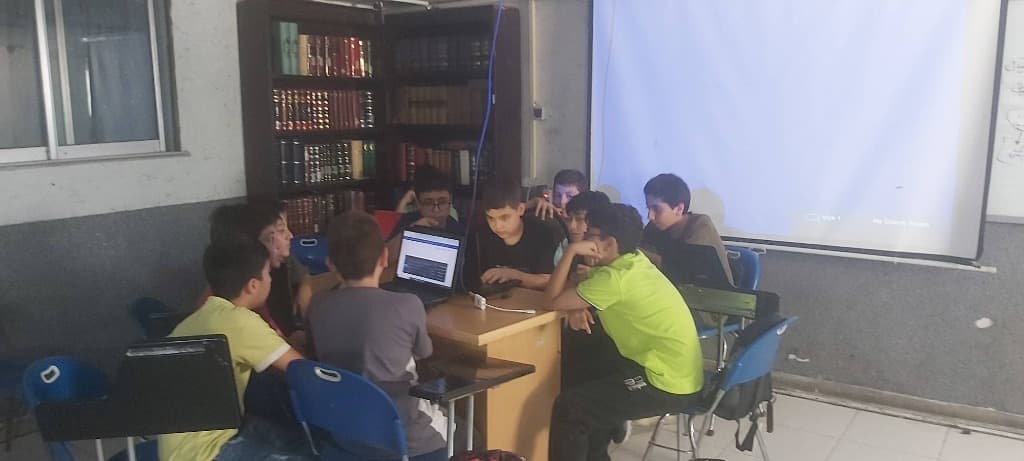
Pedagogical research consistently indicates that introducing computational principles during formative cognitive stages (ages 8 to 16) produces profound compounding benefits across mathematics, language comprehension, and spatial logic. Rather than memorizing abstract rules, students learn how to formulate hypotheses, isolate variables, and design functional models using accessible visual interfaces.
According to global educational analyses by the World Economic Forum, over 85% of forthcoming professional specializations will demand active fluency with computational reasoning tools. Children who grasp these principles early transition smoothly into higher education and technical disciplines without the steep learning curves experienced by untrained peers.
Why Must Kids Learn Computational Thinking Alongside Traditional School Subjects?
Computational thinking teaches children to dissect ambiguous, multi-variable challenges into sequential, solvable components. This cognitive methodology directly elevates performance in STEM disciplines and daily problem-solving, equipping students to approach complex real-world situations with analytical calm and creative ingenuity.
Educational psychologists note that traditional schooling often rewards rote memorization rather than experimental problem exploration. In contrast, training in intelligent systems encourages young learners to treat mistakes as diagnostic feedback. When a computer vision model misclassifies a hand gesture, students iterate on dataset quality and lighting conditions, directly cultivating scientific resilience.
The 5 Transformative Advantages of Early AI Education for Kids and Teens
Early foundational education yields five durable pillars: mastery of algorithmic problem solving, active transition from screen consumer to software creator, accelerated creative synthesis, early readiness for elite careers, and grounded ethical discernment regarding online safety, privacy, and synthetic media manipulation.
- Deconstructing Complex Realities: Children learn how to separate signal from noise, structuring raw observations into clean data attributes and logical operational branches.
- Transitioning from Consumer to Digital Inventor: Instead of spending unproductive hours scrolling video feeds or playing games, learners build interactive vision models, smart chatbots, and intelligent animations.
- Supercharging Visual and Narrative Imagination: Utilizing creative generation tools enables young minds to bring ambitious storyboards, musical compositions, and scientific simulations to life rapidly.
- Future-Proof Academic Career Positioning: Developing practical literacy before university entrance ensures students excel in computer science, robotics, medicine, and quantitative economics.
- Digital Ethics, Privacy, and Synthetic Media Awareness: Understanding model mechanics equips teenagers to recognize deepfakes, resist addictive behavioral loops, and protect their personal data online.
Pedagogical Comparison: Passive Screen Consumption vs Active Creative AI Education
Contrasting passive media consumption with structured technological education reveals stark differences in cognitive development, attention span, and long-term problem-solving agency. Structured computational coursework builds active creators capable of designing interactive solutions rather than docile consumers.
| Developmental Dimension | Passive Digital Consumption | Active AI Education at DigiNoron |
|---|---|---|
| Cognitive Engagement | Subconscious scrolling and dopamine-driven distraction | Active hypothesis testing and algorithmic model training |
| Creativity & Output | Receptive only, zero tangible intellectual production | Publishing games, visual classifiers, and interactive stories |
| Perception of Technology | Mystified magic or intimidating black box | Grounded scientific understanding of inputs, weights, and logic |
| Online Safety Awareness | Vulnerable to phishing, clickbait, and algorithmic traps | Critical awareness of digital privacy, bias, and media veracity |
Empower your teen with real-world Python and computer vision projects this semester.
Schedule an Assessment SessionStep-by-Step Curriculum Progression for Young Learners
DigiNoron's structured learning pathway progresses across four age-tailored milestones: visual coding puzzles (ages 8-10), interactive classifier training with Teachable Machine (ages 10-12), conversational logic and Python foundations (ages 12-14), and hands-on computer vision and neural applications (ages 14-17).
By anchoring abstract computational concepts in playful, interactive projects, learners build genuine technical competence without frustration. To explore our full course catalog, visit the DigiNoron Kids & Teens Educational Track.
Give your child the competitive edge of tomorrow. Consult with our academic mentors.
Enroll in DigiNoron Youth AcademyFrequently Asked Questions Concerning Early AI Education for Children
Here are direct, authoritative answers to top parent questions regarding the optimal age to begin, prerequisites, screen time concerns, differences from traditional coding classes, and how these courses prepare students for university admissions.
1. What is the ideal age for children to begin learning computational concepts?
Children can begin foundational logic and visual block programming as early as age 8. By ages 11 to 13, students comfortably train custom image classifiers and grasp basic machine learning workflows, transitioning to text-based Python programming by ages 13 to 15.
2. Does learning AI require advanced mathematical background?
No, youth courses focus on visual intuition, pattern recognition, and conceptual logic rather than multivariable calculus. Students discover how computers learn from examples through visual data categorization, building mathematical appreciation naturally.
3. How does this differ from traditional children's coding courses?
Traditional coding teaches deterministic rule-based instructions (e.g. if key pressed, move character). Modern intelligent courses teach probabilistic learning systems where models discover patterns from data, preparing students for 21st-century software paradigms.
4. Does this increase unhealthy screen time for young children?
Our curriculum transforms passive screen scrolling into active creative engineering. Projects integrate physical webcam interactions, voice recognition experiments, and collaborative team problem-solving, fostering genuine cognitive agency.
5. How does this training enhance university admissions and career prospects?
Completing concrete machine vision and natural language capstone projects provides high schoolers with impressive portfolio demonstrations for prestigious university admissions across computer science, engineering, and medical sciences.
About the Author & Academic Department:
Dr. Mehran Shirzad — Head of Youth Computational Pedagogy at DigiNoron Academy
With over 12 years of specialized research in youth cognitive science and STEM curriculum design, Dr. Shirzad has developed award-winning project-based curricula implemented across leading schools, preparing thousands of young minds for future scientific leadership.
Dr. Mehran Shirzad
Director of Youth AI Education