XPeng's IRON Humanoid Robot: A Home Robot Priced Like an Electric Car
Quick answer:
Chinese EV maker XPeng says its IRON humanoid robot will go on public sale in 2027 at a price of roughly a median-priced electric car. According to Digital Trends (November 26, 2026), Vice Chairman Brian Gu told Bloomberg the robot will begin training as a retail assistant in XPeng stores in Q1 2027 before a public launch in Q2; the company is targeting sales of "tens of thousands" of humanoid robots that same year. Home use, however, is still further out: one to two years after success in commercial settings.
AI is no longer just software; it's entering the physical world. To prepare your organization — or your kids — for that future, talk to DigiNoron's specialists.
Request a ConsultationWhat is the IRON humanoid robot — and how much will it cost?
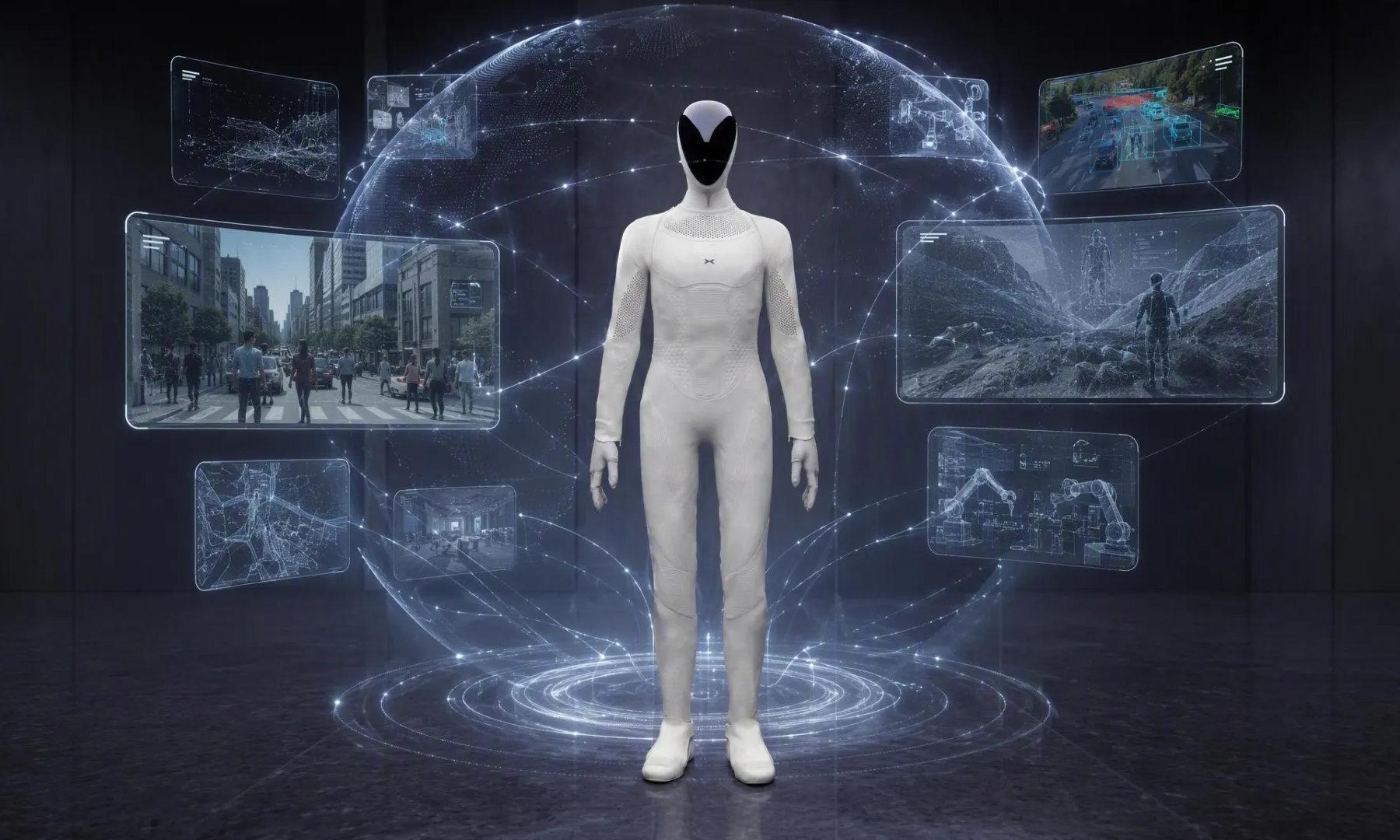
IRON is the humanoid robot of XPeng, the company we mostly know for its electric cars. Vice Chairman Brian Gu told Bloomberg that IRON's price at public launch will be roughly the "median selling price of an electric car" — no exact figure yet, but the message is clear: the humanoid robot wants to come off the luxury shelf.
That sentence is a turning point, because until now humanoid robots were either laboratory projects or sold to corporations at astronomical prices. When a manufacturer with mass-production car experience sets "the price of a car" as the benchmark, it means the target is the mass market, not a few hundred showroom units. At its AI Day (November 25, 2026), XPeng even released a short film titled ORIGIN narrating the concept of "Physical AI": intelligence whose natural home is the real human world.
What can IRON actually do?
Per the announced specs, IRON has 76 degrees of freedom, more than 1,500 tactile sensing points and three in-house "Turing" AI chips running its onboard models and whole-body control. The robot navigates autonomously, accepts tasks by voice or app, returns to its charging point by itself and monitors its own operational health.
Those last four capabilities are exactly what separates a "robot employee" from a display mannequin: autonomous navigation means it moves without manual mapping; voice/app tasking means a non-technical user can work with it; self-charging means it's ready for a full shift; and health monitoring means a fault is reported before it damages a production line or a sales floor. It is the same logic of process automation — now carried into the physical world, the approach we apply to software processes in DigiNoron's enterprise AI services.
What happened at AI Day?
At its AI Day (November 25, 2026), XPeng brought the latest version of IRON on stage and the robot answered audience questions live — not with a pre-recorded video but with real on-stage execution. The company says IRON is slated to sell "tens of thousands" of units in 2027.
Answering questions live is a hard test, because processing latency, natural-language understanding and motion control are all measured simultaneously on stage. Posts published from the event show the company performed the demonstration confidently while releasing the ORIGIN film centered on "Physical AI". Still, there is a gap between a successful stage demo and dependable daily work in a crowded store — and XPeng's rollout plan is designed precisely to cross that gap.
Rollout plan: stores first, then industry, eventually homes
XPeng is taking a staged approach: IRON trains as a retail assistant in the company's own stores from Q1 2027, goes on public sale in Q2, and heads to homes after success in commercial and industrial settings. Household deployment, per Gu, begins one to two years after commercial success.
Why is that order logical? Because an XPeng store is a controlled but real environment: real customers, real questions, real mistakes — a safer learning ground than a home. The company itself has been explicit about the home-stage challenges: safety around children, elderly people and pets. So your "robot roommate" is still years away, and dreamy promises showing a robot at your door this year don't match the maker's own official schedule.
The revenue model: it's not just the purchase price
XPeng has explicitly said it sees revenue beyond hardware: software subscriptions, upgrades, training and services could generate recurring income. In other words, the robot may get its own version of the modern gadget subscription trap.
For home and business buyers that means calculating total cost of ownership beyond the sticker price: how much do you pay monthly for intelligent features? Which capabilities stop working without a subscription? We've seen this pattern in electric cars (paying for acceleration or range) and smart gadgets, and now it's arriving at humanoid robots. The advice we give organizations at DigiNoron is the same: before admiring the base price, compute the whole cost cycle — exactly what you should do when choosing enterprise AI tools too.
Why "the price of a car" is an important benchmark
It's not the first time a tech company has talked about humanoid robot pricing, but it is among the first times a manufacturer with mass-production experience connects the price benchmark to families' shopping baskets: anyone who can afford an ordinary electric car is, in XPeng's view, a potential robot buyer.
That means IRON's target market widens from "large enterprises" to "commercial spaces and then households", and the public's mental image of a humanoid robot changes: not a sci-fi prop but a big, expensive home appliance like a car. Of course, remember this is still an announced price target, not a store tag; its realization depends on production scale, component costs and competition. Those who know tech history also know a price promise can be a marketing tool — see the balanced assessment below.
IRON's road to your home: phase-by-phase comparison
| Phase | Approximate timing | Deployment site | Main challenge |
|---|---|---|---|
| 1. Store training | Q1 2027 | XPeng stores | Working with real customers in a real environment |
| 2. Public launch | Q2 2027 | Commercial settings | Reaching "tens of thousands" of units sold |
| 3. Industrial use | After commercial success | Factories and operations | Reliability in a complex environment |
| 4. Household deployment | 1–2 years after commercial | Homes | Safety around children, elderly and pets |
What does this mean for families and businesses?
For businesses: booking robot coworkers at customer touchpoints starts in 2027, and organizations whose processes are already intelligent and documented will absorb this technology sooner. For families: today's children will work with "Physical AI"; learning AI from an early age is no longer an advantage, it's basic literacy.
The hidden message of the XPeng news for a non-technical reader is simple: the next wave of AI has a body. Just as voice assistants arrived on phones over the past decade, the coming years will bring physical forms of AI into stores, factories and homes. Whoever starts today in AI courses for kids and teens will be the designer and employer in that new job market, not a confused user. For a similar example of AI entering everyday life, read our piece on Meta's Muse Charm AI gadget.
Let DigiNoron's specialists design your organization's intelligent-transformation plan — or your child's learning path.
Request a Consultation5 common traps in judging humanoid robots
Trap 1: reading the media timeline as the official one
The "2027" headline does not mean a robot in your home; XPeng itself says homes enter the plan one to two years after commercial success. Always read the last phase of the roadmap, not just the year number.
Trap 2: forgetting the subscription cost
XPeng has explicitly mentioned recurring revenue from software subscriptions, upgrades and services. The base price is only part of the cost of ownership; add the monthly payments to your math.
Trap 3: equating a stage demo with real readiness
Answering a few questions live on stage is far from daily work in a crowded store or a home. Demos show capability, not guaranteed stability — judge by real-environment performance.
Trap 4: ignoring the real safety challenges
XPeng itself names safety around children, elderly people and pets as a pre-household challenge. A robot working next to your family needs far stricter safety standards than a showroom robot.
Trap 5: treating "the price of a car" as the final tag
The announced price is a target ("the median EV price"), not a final figure; the exact number is unannounced and depends on the market and production scale. Tie your purchase decision to the official date and price, not the headlines.
Top user questions (voice search)
How much will the XPeng IRON robot cost?
No exact price yet; per XPeng's vice chairman on Bloomberg, roughly the median selling price of an electric car — the cost of an ordinary EV.
When does the IRON humanoid robot go on sale?
It trains in XPeng stores from Q1 2027 and goes on public sale in Q2 2027; household deployment comes one to two years after commercial success.
What can the IRON robot do?
With 76 degrees of freedom, 1,500+ tactile sensing points and three Turing chips, it navigates itself, takes tasks by voice or app, recharges itself and monitors its own health.
Are humanoid robots safe for children?
Still too early; XPeng lists safety around children, elderly people and pets as the home-stage challenge, to be addressed one to two years after commercial deployment.
The era of "Physical AI" is coming — let DigiNoron prepare your organization and your family for it.
Request a ConsultationFAQ
How much will the XPeng IRON robot cost?
No exact price has been announced; XPeng Vice Chairman Brian Gu told Bloomberg IRON will be priced around the median selling price of an electric car — car money, not a luxury lab curiosity.
When does the IRON humanoid robot go on sale?
IRON starts training as a retail assistant in XPeng stores in Q1 2027 and goes on public sale in Q2 2027; household deployment begins one to two years after success in commercial settings.
What can the IRON robot do?
XPeng says IRON has 76 degrees of freedom, more than 1,500 tactile sensing points and three in-house Turing AI chips; it navigates autonomously, accepts tasks by voice or app, recharges itself and monitors its own operational health.
Are humanoid robots safe for homes and children?
It's still early. XPeng itself lists safety around children, elderly people and pets among the challenges before household deployment, which it schedules one to two years after commercial success.
How many humanoid robots does XPeng want to sell?
XPeng is targeting sales of tens of thousands of humanoid robots in 2027 — the crucial test of whether its robotics ambitions can move beyond flashy demos.

DigiNoron Specialist Team
5+ years of hands-on AI projects
The DigiNoron Specialist Team draws on real-world AI projects across industries to produce articles and courses that upgrade the digital skills of executives, employees and enthusiasts.
DigiNoron Specialist Team
5+ Years of AI Project Experience