Google Built a Fake Internet: How Chrome's AI Agents Train in a Mirror Web
Executive Summary & Quick Answer:
Google built a "fake internet" for its AI agents. Per Digital Trends (November 2026), the company runs a complete, controlled copy of the web that nobody outside the team can visit — social networks, shopping sites, and bank dashboards built from the same parts real sites use. Gemini-powered Chrome agents practice there, make mistakes, and fend off simulated attacks — so those mistakes never happen on your real web.
What Is Google's "Fake Internet" — and Why Was It Built?
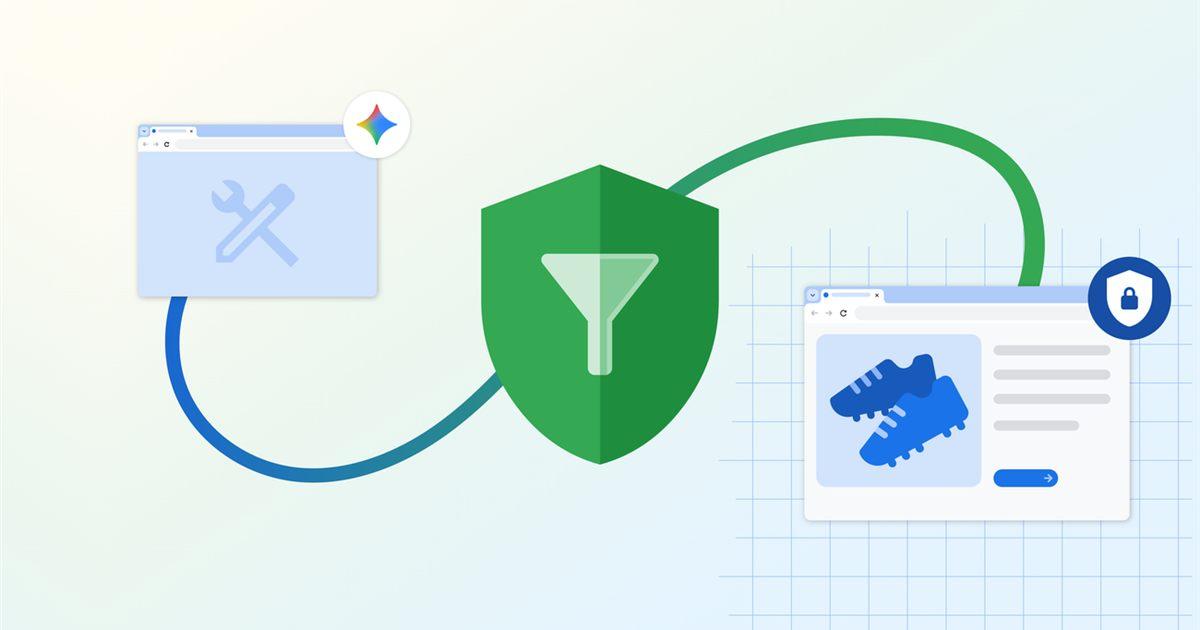
Google's fake internet — dubbed the "Mirror Dimension" — is a full private copy of the web where Gemini-powered Chrome agents rehearse real missions. Nothing outside the team can reach it, and it is built from the same technologies real websites use.
The idea is simple but smart: if an agent is going to shop online, fill in banking forms, or send email, it needs somewhere to fail where failure costs nothing. The approach resembles the mirror world from the Doctor Strange movies — a world like ours where nothing that happens touches the real one. The agent wave we tracked in enterprise AI agents and Meta's agent-driven gadget has now reached the browser — and Google chose to finish the hardest part of testing before agents ever reach your screen.
Want AI agents that work "tested and safe" in your organization?
Get expert AI consulting from DigiNoronWhy Doesn't Google Test Agents on the Real Web?
Because the web has no single protocol, so agents must learn by trial and error; they can cause real harm; and models that realize they are being evaluated behave differently. A fake web that feels real solves all three problems at once.
Every website behaves differently, so you cannot hard-code how an agent navigates each page. The agent has to fail freely to learn — and letting such a system loose on a web full of real bank accounts and personal data is not responsible. Small lab setups do not work either: per the report, models can figure out they are being evaluated and behave differently while watched. The past few days even saw multi-day outages of US services caused by untested AI code — echoing the agent crisis lessons from banking we analyzed earlier.
What Happens Inside the Mirror Dimension?
Agents complete the missions Google's team assigns — from shopping and filling forms to working with bank dashboards — while defending themselves against attacks designed to measure security and resilience: skill training and stress testing in one private playground.
The key is simulation quality: the fake sites are "built from the same parts real sites use," so agents face the same complexity, random glitches, and unpredictable behavior of the real web — not an idealized environment that teaches nothing useful. The payoff for ordinary users is clear: the agent that shows up in your browser has already had thousands of bad days somewhere you will never see, and every mess it made in there is one it hopefully won't make on your actual internet.
Comparing the Three Testing Environments for AI Agents
The real differences between "testing on the live web," "simple lab testing," and "realistic web simulation" are risk and result validity; Google's approach is the only one that both eliminates harm to real users and produces lessons that hold up in the real world.
The table below shows where Google's approach sits:
| Criterion | Test on the real web | Simple lab test | Google's Mirror Dimension |
|---|---|---|---|
| Risk to real users | High; direct harm to accounts and data | Zero | Zero |
| Resemblance to the real web | Complete | Low; idealized, lacking complexity | High; built from the same parts as real sites |
| Evaluation detected | No | Yes; model behaves differently | No; the fake web "feels real" |
| Security / attack testing | Impossible/unethical | Limited | Simulated attacks measure resilience |
| Validity in the real world | High but with heavy costs | Low | High; the same failures seen, with no victims |
Technical Deception: How Google Convinced Chrome the Fake Web Is Real
Building the environment took "creative cheating": forged certificates were issued and some of Chrome's own safety checks were worked around so the browser would treat the agent like any ordinary visitor — otherwise the agent would behave differently in an artificial environment.
This is the most important part for technology leaders: test quality depends on simulation quality. If the browser "knows" it is in a test environment, or the fake sites' certificates differ, the test results carry systematic differences. Google issued forged certificates and tuned the safety checks so the agent experiences exactly what it will experience on the real web. Engineering-wise, this is the "test in real conditions" principle — the same principle we insist on in enterprise smartification: pilot AI agents inside your real business environment, not in an ideal demo.
The Mirror Dimension Lesson for Organizations: Where Should You Test Agents?
The enterprise message is clear: no AI agent — in-house model or off-the-shelf tool — should run on the real system and real data the first time. A realistic sandbox, restricted access, and attack scenarios are prerequisites for every agent deployment.
Several days of US service outages caused by untested AI code showed what "shipping an untested product to customers" costs. Google's pattern has three copyable components: an environment that mirrors the real system (not an ideal one), deliberate failure and attack scenarios, and repeated testing until the agent stabilizes. In our enterprise AI transformation model we apply the same triad — the approach we explained in agents vs. chatbots. Conversely, this is also an opportunity: as browsers fill with agents, "being discoverable and usable by AI agents" becomes a new SEO and sales criterion.
Is your organization's AI-agent sandbox ready?
Start working with DigiNoron5 Common Mistakes About Testing and Deploying AI Agents
The most common mistake is equating "a successful demo" with "production readiness"; the list below covers five traps both large companies and mid-size organizations fall into on the road to agent deployment.
1. Testing on the real web with real accounts
Like sending a rookie pilot up in a passenger jet; an agent must first live through thousands of bad days in a simulated environment — not on customers' real data.
2. Relying on an ideal test environment
A test environment that is always clean and error-free teaches lies; fake sites must be built from the same parts and complexity as the real system.
3. Ignoring the observer effect
Models can tell they are being evaluated and change their behavior; results from a test that "feels like a test" do not generalize to the real world.
4. Leaving attack scenarios out of testing
Should the agent just complete tasks? No — just as Google exposes its agents to simulated attacks, security and resilience testing is an inseparable part of evaluation.
5. Testing once and walking away
Agent testing is a process, not an event; without a repeat test-fix cycle, the failures missed in testing will be seen on the production system.
Voice-Search Questions About Google's Fake Internet
Did Google really build a fake internet?
Yes; per Digital Trends (November 2026), Google runs a complete private copy of the web — with social networks, shopping sites, and bank dashboards built from the same parts real sites use — where Gemini-powered Chrome agents practice.
Why doesn't Google test agents directly on the real internet?
Because agents learn by failing and can cause real harm; plus models that sense they are being evaluated behave differently. A realistic fake web solves all three problems at once.
What is Google's Mirror Dimension?
The name of Google's simulated web environment: a complete copy of the web where agents complete missions and defend against deliberately staged attacks to prepare for the real internet.
What does this mean for ordinary users?
The agent arriving in your browser has already seen thousands of errors in training; the odds of a botched purchase or leaked data on your real internet go down.
Build the agentic future for your business today
Request a consultation and project quoteSources and further reading:
FAQ: Google's Fake Internet and Chrome's AI Agents
What is Google's fake internet?
A full, controlled copy of the web only Google's team can access; social networks, shopping sites, and bank dashboards built with the same technologies as real sites, where Gemini-powered Chrome agents practice, fail, and are security-tested against simulated attacks.
Why is testing agents on the real web dangerous?
Because the web follows no single protocol and agents learn by trial and error; on the real web those errors mean wrong purchases, incorrect banking forms, or leaked data. Models that sense evaluation also behave differently, invalidating the test.
What did Google do to build this environment?
Per Digital Trends, it took "creative cheating": forged certificates and workarounds around some of Chrome's own safety checks, so the browser accepts the agent as an ordinary visitor and its behavior in testing matches the real web.
What should organizations learn from this approach?
No agent should run on the real system the first time. Google's copyable pattern: a sandbox mirroring the real system, deliberate attack and failure scenarios, and a repeated test cycle until stability — the standard for enterprise agent deployment.
Does the fake internet matter for ordinary users?
Yes — to their benefit: the agent that will one day shop or fill forms in your browser has already made its thousands of mistakes in training; the chance of harm on your real internet drops, and trust in browser agents becomes meaningful.
About the Author & Content Authority:
DigiNoron Specialist Team — 5+ Years of AI Project Experience
The DigiNoron Specialist Team — university faculty members and industry data engineers with 5+ years of hands-on AI project experience — compiled this analysis based on Digital Trends' report on Google's simulated web environment for testing Gemini-powered Chrome agents (November 2026) and the team's own experience deploying enterprise AI agents.
Cover image: official image of the source article on Digital Trends; news source: Digital Trends and Google's official blog.
DigiNoron Specialist Team
5+ Years of AI Project Experience