AI on the Fire Line: How Watch Duty Used Gemini to Get Wildfire Alerts Out in Under 30 Seconds
Executive Summary & Quick Answer:
AI is now working where it saves human lives. Per Google's official announcement (November 20, 2026), a Google.org Fellowship team spent six months embedded with the nonprofit app Watch Duty building a Gemini-powered tool that turns noisy analog fire radio into clean, searchable text; the result: new fire dispatches spotted in under 30 seconds, word error rate cut from 38% to 22.34%, and the platform's first-ever overnight Critical Alert during Washington's Railroad Fire.
Is the real value of AI in your organization defined beyond chatbots?
Get a DigiNoron enterprise AI transformation consultationWhat Is Watch Duty — and Why Does Every Second Count in a Wildfire?
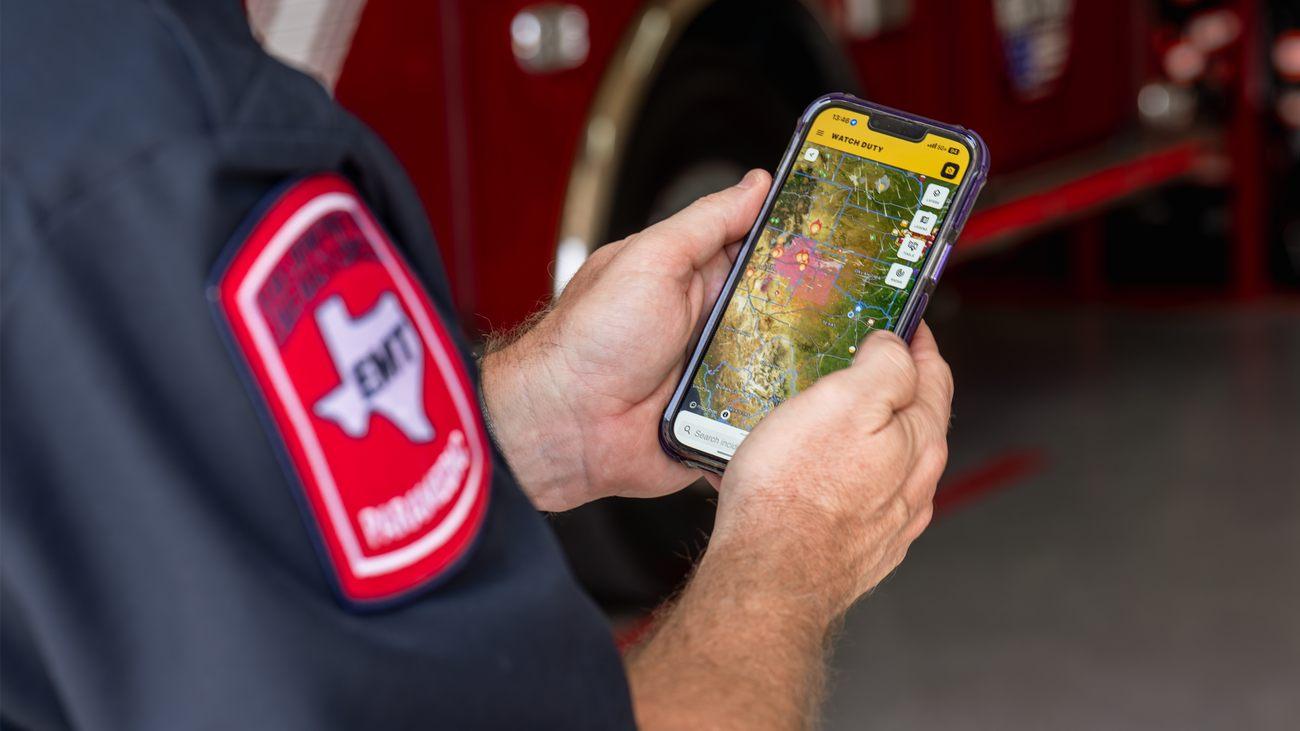
Watch Duty is a nonprofit wildfire alert app run by active and retired firefighters, dispatchers, and first responders; its audience passed 16 million people last year. When a fire starts, minutes decide whether people evacuate safely.
This story, published at the height of fire season, shows that "AI for saving lives" is no longer a lab demo: it is an operational, daily tool with published numbers — 30-second detection, 400 active feeds, 200+ hours of speech per day. It is the same data-driven language behind serious AI projects, from decoding the human genome with AlphaGenome to restoring kelp forests with DeepVariant.
The Challenge: Fire News Still Travels on Decades-Old Analog Radio
Across much of the United States, the first word of a new fire still travels over decades-old analog VHF radio — engine noise, wind, static, and rapid-fire tactical jargon that even humans struggle to decipher. Watch Duty reporters used to monitor up to 20 feeds manually.
Why is this hard? Because engine noise, wind, and fast tactical terminology make general speech models badly inaccurate — the word error rate on such audio used to be around 38%, meaning more than one in three words was wrong. Volunteers had to monitor up to 20 radio feeds simultaneously by hand: exhausting, error-prone, and practically impossible to cover around the clock in every region.
How Was the Gemini Tool Built? Six Months Embedded with Firefighters
A dedicated team of Google engineers and researchers spent six months embedded full-time with Watch Duty and, through the pro-bono Google.org Fellowship, built a Gemini-powered tool on more than 20,000 hours of past radio recordings — one that wipes out heavy static and translates specialized firefighting terminology into clean, searchable text.
The collaboration model matters too: the Google.org Fellowship means Google specialists joined a nonprofit full-time, free of charge. Watch Duty is run by active and retired firefighters, dispatchers, and first responders — and that operational knowledge became the training feedback loop. The project's official site is available at watchduty.org.
This is not the first collaboration: in 2024, Google.org provided Watch Duty with $2 million in funding and $300,000 in Google Cloud credits to compile satellite, camera, and radio data for validating new fires; and during US fires such as the Palisades, Eaton, Hurst, and Auto fires, Google Search featured Watch Duty in SOS alerts alongside official emergency guidance.
The Results in Numbers: What Exactly Did the Gemini Tool Change?
Across Watch Duty's network, the new tool flags fire dispatches in under 30 seconds, cut the word error rate on degraded VHF audio from 38% to 22.34%, transcribes more than 200 hours of radio speech a day from about 400 active feeds, and lifted volunteer satisfaction with transcription tools from 35.3% to 92.3%.
These numbers carry three messages. First, the "listening" problem is effectively solved: areas with no other automated dispatch detection now get a sub-30-second signal, so a new fire is no longer missed just because no one was listening. Second, accuracy on the hardest kind of audio reached a reliable level — a 15.66-point drop in word error rate means dozens more correct words per tactical report. Third, the system was designed and tested for scale: more than 10,000 feeds at once, not just today's 400.
The key lesson for any organization is right here: a general Gemini model did not deliver this overnight; the value came from tuning on specialized data — the same logic pursued in AI entrepreneurship versus pure engineering: the generic tool is cheap, but the real solution is built from data + domain + tooling. Full details are published in Google's official blog announcement.
The Real-World Test: The Railroad Fire and the First Overnight Critical Alert
In July 2026, the fast-moving Railroad Fire ignited at night in Washington; the Gemini tool transcribed the first 911 dispatch straight from noisy radio audio and flagged it in under 30 seconds. The result was Watch Duty's first-ever overnight Critical Alert — a notification that breaks through do-not-disturb mode.
The significance is in the details: until then, a night like the Railroad Fire's meant "nobody is awake and nobody is listening to the radio." The tool closed exactly that blind spot; reporters gained the time to verify the fire and push the alert, and residents evacuated before flames reached homes. Google described it as proof of what faster detection means when communities are asleep and every minute counts.
A technical note for enthusiasts: these alerts are delivered through Firebase Cloud Messaging, and when Watch Duty's audience passed 16 million people last year, Google Cloud raised the messaging limit from 600,000 to 1 million so alerts arrive without delay. Alert infrastructure at emergency scale is itself a serious engineering problem.
Comparison: Manual Radio Monitoring vs AI-Powered Listening
Manual monitoring means a human listening to up to 20 radio feeds at once and hoping to hear the dispatch; AI-powered listening means transcribing 200+ hours of speech daily from about 400 active feeds, tested up to 10,000. It is the difference between "chance" and "guaranteed coverage".
| Criterion | Manual monitoring (before) | Gemini tool at Watch Duty (after) |
|---|---|---|
| Dispatch detection speed | Depends on a human listening; often delayed by minutes or more | Auto-flagged in under 30 seconds |
| Accuracy on noisy VHF audio | Word error rate around 38% | Word error rate 22.34% |
| Monitoring scale | Up to 20 feeds monitored manually, simultaneously | 200+ hours/day transcribed from ~400 active feeds; tested to 10,000 |
| Quiet-hours coverage | A dispatch was missed if nobody was listening | Automatic sub-30-second flagging, 24/7 |
| Human role | Exhausting audio hunting + verification | Focused entirely on verification and publishing |
| Tool satisfaction | 35.3% reporter satisfaction | 92.3% after deploying the Gemini tool |
Has your organization's "noisy radio" — raw data, paper reports, manual processes — been translated into the language of data yet?
Talk to DigiNoron consultantsFive Common Misconceptions About AI in Emergency Systems
Before drawing the wrong conclusions from this story, correct these five common misconceptions; each is repeated regularly in management meetings and public debate, and each blocks a realistic understanding of AI's role in emergency systems.
1. "AI means chatbots and text generation"
The core of this project is an audio and operational problem: listening to noisy radio across hundreds of channels. The biggest value of AI is built in specialized domains — emergency response, industry, energy — not just generic content creation.
2. "Automated transcription is just an off-the-shelf model — what's the big deal?"
VHF radio audio with engine noise, wind, and rapid tactical jargon is among the hardest input for general models; that is why the word error rate used to exceed 38%. A six-month Google team tuned the model on more than 20,000 hours of real fire radio to bring it to 22.34%.
3. "So AI will replace firefighters and fire reporters"
The opposite: the tool automated only the listening layer, while the decision to verify and publish alerts remains human. The durable pattern is "humans + AI" — the machine makes listening cheap and frees humans for judgment.
4. "This is just an advertising project for the Gemini model"
The project's metrics are operational: word error rate on degraded audio, hours transcribed per day, volunteer satisfaction, and even a real life-saving overnight alert during the Railroad Fire. The marketing is the margin of these results, not their substance.
5. "You need fully modern digital infrastructure before AI can help"
The input here was decades-old analog radio. Much of AI's value comes from bridging over an organization's legacy infrastructure, not from waiting to replace all of it.
What This Story Teaches Organizations and Learners
AI multiplies in value exactly when it is run on an organization's "old and noisy" infrastructure — where competition is thin and margins are high. The Gemini layer here did not just clean audio; it made firefighters' specialized knowledge searchable and scalable.
The numbers are verifiable: a $2 million Google.org investment in 2024 plus $300,000 in cloud credits, a six-month embedded team, analysis of more than 20,000 hours of recordings, and a result validated in one real night of fire. The same formula works at smaller scale: real problem + real data + proven tool — the logic behind professional AI use beyond content creation.
For more serious AI applications, don't miss Project Suncatcher's data centers in space and decoding the human genome with AlphaGenome.
Voice-Search Questions About Watch Duty and Gemini
How does AI help detect wildfires faster?
By automatically listening to fire radio and turning noisy audio into text with the Gemini tool; a 911 dispatch buried in static gets flagged to Watch Duty reporters in under 30 seconds, even when nobody is listening.
What is Watch Duty?
A nonprofit wildfire alert app run by active and retired firefighters, dispatchers, and first responders, sending real-time fire alerts to more than 16 million users.
Ready to run your organization's first real AI project with an executable roadmap?
Start an AI transformation consultation with DigiNoronFAQ: AI and Rapid Wildfire Alerts
1. What exactly do Watch Duty and the Gemini tool do?
They turn noisy analog fire radio into clean, searchable text so a new fire dispatch is flagged to human reporters in under 30 seconds; verifying the incident and publishing the final alert remain human decisions.
2. What are the tool's measured results?
Dispatch detection in under 30 seconds, word error rate on degraded VHF audio cut from 38% to 22.34%, 200+ hours of speech transcribed daily from about 400 active feeds (tested for 10,000+), and volunteer satisfaction rising from 35.3% to 92.3%.
3. What is a Critical Alert and why does it matter?
An urgent notification that breaks through do-not-disturb mode; during the nighttime Railroad Fire in Washington (July 2026), Watch Duty sent its first-ever overnight Critical Alert, giving residents time to evacuate before flames reached homes.
4. What role did Google.org play?
Through the Google.org Fellowship, a team of Google engineers and researchers spent six months full-time, pro bono, with Watch Duty, building the Gemini-powered tool on 20,000+ hours of past radio recordings; Google.org had also earlier provided $2 million in funding and $300,000 in cloud credits.
5. Will AI replace firefighters and fire reporters?
No; the tool automated the listening layer so no dispatch is missed because nobody was listening, freeing humans for verification and final decisions; the winning pattern is "humans + AI", not replacement.
About the author and content authority:
DigiNoron Specialist Team — 5+ years of hands-on AI projects
The DigiNoron Specialist Team — university lecturers and industry data engineers with 5+ years of AI projects in petrochemical, water utility, and urban management — compiled this analysis from Google's official blog announcement on the Google.org × Watch Duty collaboration (November 20, 2026) and publicly available information about Gemini models and Firebase infrastructure.
Cover image: official image from the Google blog article; source: the official Google blog (blog.google).
DigiNoron Specialist Team
5+ Years of AI Project Experience